Starting a lingerie brand: the manufacturing steps
The steps to launch a lingerie brand with a manufacturer: concept, tech pack, samples, fit, production, quality checks and packaging.

Table of Contents
- What should you decide before you contact a manufacturer?
- The manufacturing steps in order
- How do you write a lingerie tech pack?
- Which materials should you settle early?
- Why do sampling and fit take the most effort?
- Private label, custom orders or ready-made styles: which should you choose?
- How do you choose a lingerie manufacturer?
- ❓ Frequently Asked Questions
Starting a lingerie brand with a manufacturer follows a fixed order: define the product and customer, write a tech pack, choose materials, approve samples and fit, grade sizes, run production with quality checks, then finish labels and packaging. Each step feeds the next, so a mistake caught at the sample stage costs far less than one found in bulk.
Lingerie is less forgiving than most apparel. It sits close to the body, small hardware choices change comfort, and a brand that skips planning usually pays for it in extra sample rounds. The sections below follow the order in which a manufacturer will ask you for things.
What should you decide before you contact a manufacturer?
Makers answer faster and quote more accurately when you arrive with decisions instead of a mood board. Settle four questions first. Who is the customer, and what do they wear lingerie for: everyday comfort, special occasions, or fashion-forward pieces? What is the first collection? How will you position it, since that shapes material and finishing? And where will you sell: your own store, marketplaces, or wholesale to boutiques?
Keep the first collection narrow. A small set of styles that share a base fabric and a few trims lets you learn the process without multiplying sample rounds. A harness, a garter piece and a matching choker, for example, can share one faux leather and one hardware family.
The manufacturing steps in order
The table shows what you hand over at each stage and what comes back. Skipping a row does not save time, it moves the problem to a more expensive stage.
| Step | What you provide | What you get back |
|---|---|---|
| 1. Concept and line sheet | Sketches, reference photos, target customer | Feedback on what can be built |
| 2. Tech pack | Flat drawings, measurements, materials, trims | A document both sides sign off |
| 3. Material and trim sourcing | Color targets, hardware choices | Fabric swatches and trim samples |
| 4. Pattern and first sample | The approved tech pack | A first prototype |
| 5. Fit review | Measured notes and photos from a fit model or form | A corrected pattern and second sample |
| 6. Grading and pre-production sample | Your size chart | Graded patterns and a sealed sample |
| 7. Production and quality checks | The sealed sample, order quantities | Finished goods checked against the sealed sample |
| 8. Labels and packaging | Brand labels, care information, packaging artwork | Goods ready to ship |
How do you write a lingerie tech pack?
A tech pack turns your sketch into something a pattern maker can build. Include front and back flat drawings, a measurement table for every size you plan to sell, a materials list, trim and hardware details, edge finishing or stitching notes, and label placement. Photos of reference garments help, but they do not replace measurements.
Two details cause most of the confusion. The first is tolerance: state how much difference you will accept on key measurements, so quality checks have a standard to judge against. The second is adjustability. Straps, buckles and sliders decide which body shapes a style fits, so write down the adjustment range you want instead of expecting the maker to guess it.
Multi-piece sets need a page for each piece. A harness and choker set is really two products that must be sized and finished to match, and each needs its own measurements and material notes.
Which materials should you settle early?
Material choice drives the pattern, the sewing method, the cost and how the garment feels, so decide before sampling starts. Lace, mesh and stretch fabrics raise questions about elastic and stretch recovery. Faux leather, usually PU and often sold as vegan leather, raises questions about backing and edge treatment. Our own faux leather pieces use a backing with a suede feel and laser-cut edges with no stitching along the cut, which keeps the edge flat. The options we work with are listed on the materials page.
Hardware needs the same attention. Metal O-rings, buckles and rivets add weight and change how a piece feels on the body, and finish and color can vary between batches. Ask for hardware swatches the way you ask for fabric swatches, approve one, and keep it as your reference for every later order.
Why do sampling and fit take the most effort?
The first sample almost never fits right, and that is normal. Its job is to expose construction problems and show proportion. Review it on a fit model or a form whose measurements you know, photograph it from every side, and send notes that point to a measurement instead of a feeling. "The shoulder strap sits higher than the drawing" can be acted on. "Looks off" cannot.
Send all corrections together after each sample. Sending them one at a time stretches the schedule and makes it unclear which version is current. Once the fit is approved, the maker grades the pattern to your other sizes and produces a pre-production sample, often called a sealed sample. That piece becomes the reference every finished unit is compared against.
Grading is easier on adjustable styles, because straps absorb part of the size range. Pieces with cups, underwire or elastic bands need grading by size group, and you should ask to see graded samples of at least the smallest and largest sizes before production.
Private label, custom orders or ready-made styles: which should you choose?
Where you start depends on how much design work you want to own. The routes differ in effort and in control.
| Route | What you provide | Best when |
|---|---|---|
| Existing styles with your label | Style selection, brand labels | You want to test the market with a first collection and learn the process |
| Modified styles | Changes to color, hardware, straps or proportions | You have a defined look but not a full pattern library |
| Original design | A complete tech pack | You have design experience and a clear product spec |
Our private label page explains how branded lines are set up, and custom orders covers changes to existing styles. If you are comparing makers by country, the page on our work as an apparel manufacturer in Turkey describes what we do, production capability covers the workshop side, and how wholesale works explains the ordering process.
If your first collection is built around harness pieces, the body harness category shows the kind of structure we make. Two styles show how a spec changes the work.
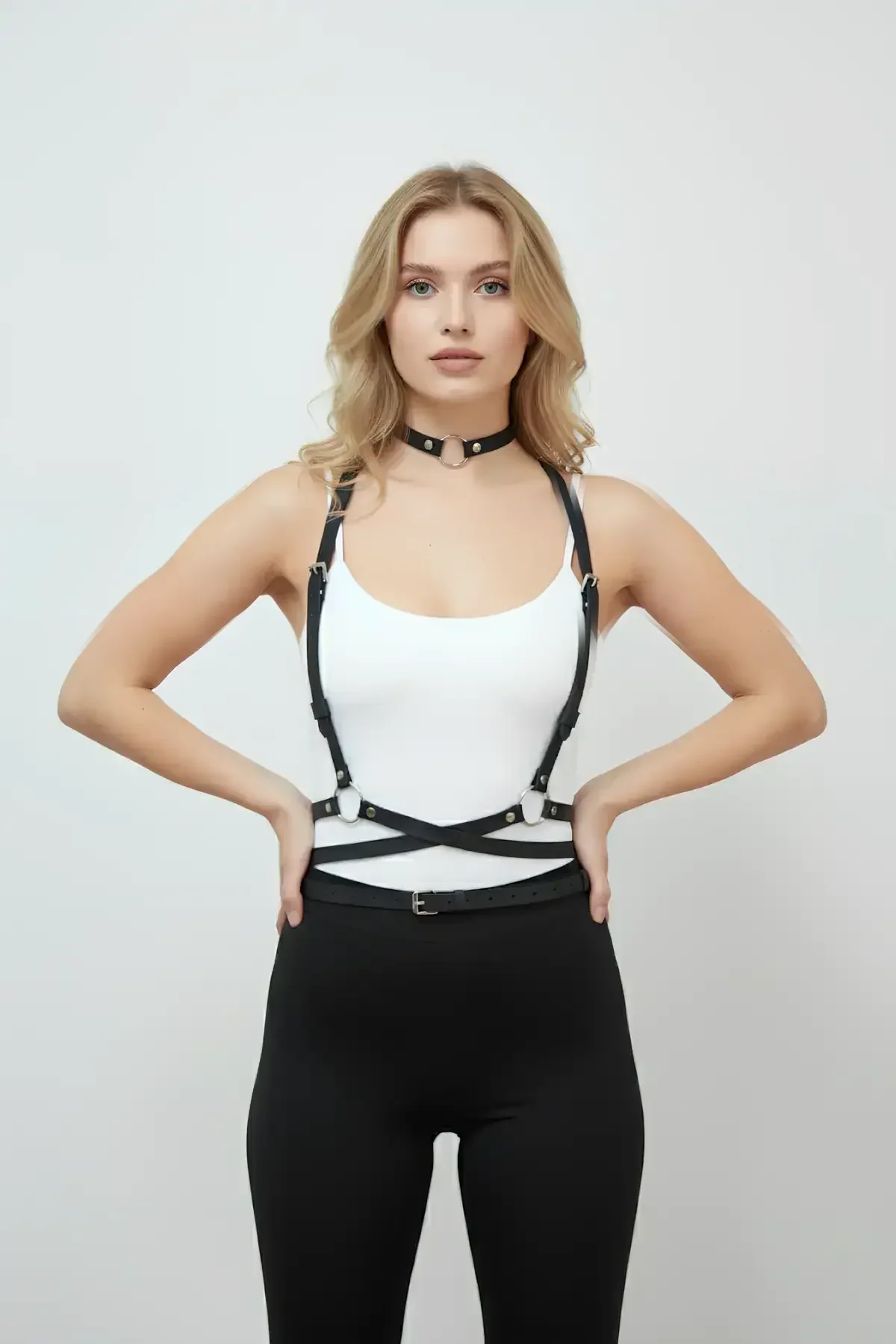 Adjustable Faux Leather Chest Harness and Choker Set
Read More →
is a two-component set, so its tech pack needs a separate page for the harness and for the choker.
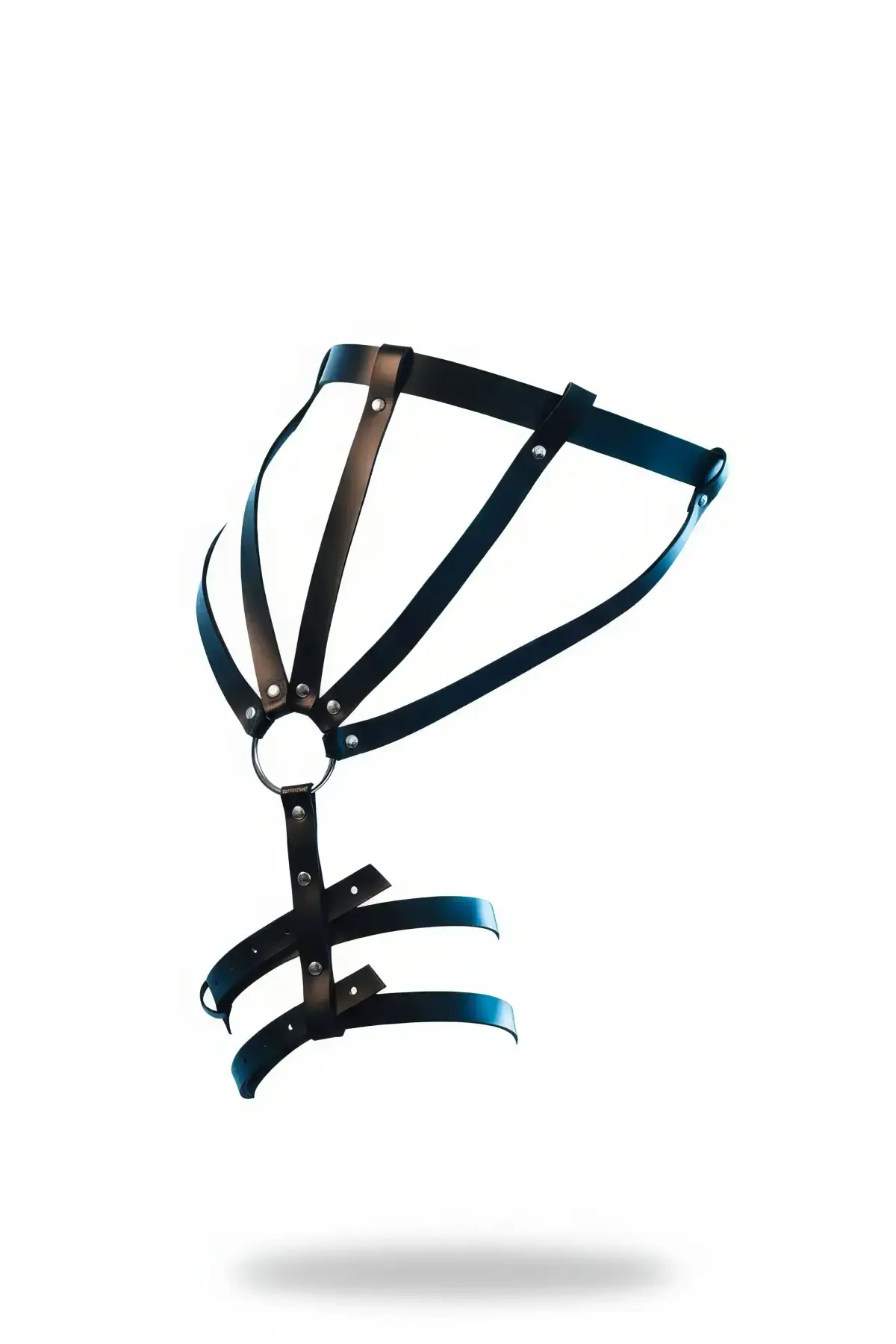 Faux Leather Thigh Garter Harness with O-Ring Detail
Read More →
carries O-ring hardware, so its tech pack needs a note on hardware finish and placement.
How do you choose a lingerie manufacturer?
Compare makers on evidence, not on promises. These five checks work for any supplier:
- Order a small paid sample to judge construction and finishing before you commit to a collection.
- Check that the maker works with your material type. Faux leather, mesh and lace are different skills, and workshops tend to specialize.
- Confirm who handles pattern making and grading, and whether revisions are included in the sample stage.
- Ask how quality checks are done and which reference they use, ideally the sealed sample.
- Agree on communication: one contact, written fit notes, and photos for every approval.
Agree on packaging early as well. Brand labels, hang tags and shipping packaging each need their own approval, and starting them alongside sampling avoids a gap between the last fit approval and launch.
❓ Frequently Asked Questions
+ How do I start a lingerie brand without a design background?
Begin with a small first collection and a manufacturer that offers branded versions of existing styles or lets you modify them. That way you learn sampling, fit review and quality checks on pieces that already have a working pattern, and you can move to original designs once you know what your customers keep buying.
+ What is a tech pack and do I need one?
A tech pack is the document that tells a maker how to build a garment: flat drawings, measurements per size, materials, trims, hardware, edge finishing and label placement. You need one for any original or modified design, because it is the shared reference for pattern making, sample review and quality checks.
+ How many sample rounds should I expect?
Plan on at least a first sample and a corrected second sample, then a pre-production sample that you seal as the standard. Complex pieces with hardware, cups or several components may need more. Sending all fit notes together after each sample keeps the number of rounds down.
+ Can I sell faux leather lingerie as vegan leather?
Faux leather is a synthetic material, usually PU, and many brands describe it as vegan leather because it contains no animal material. Describe it accurately on your listings and labels, and ask your maker for the exact material details so what you write matches what you sell.